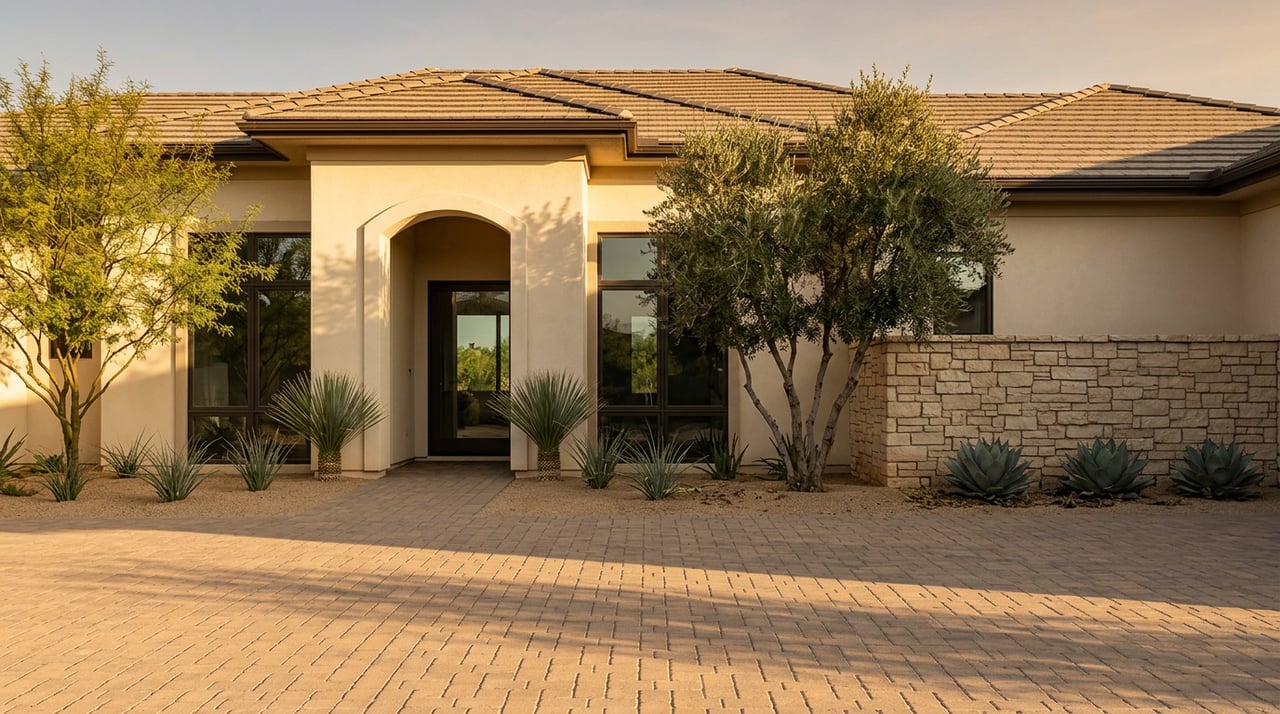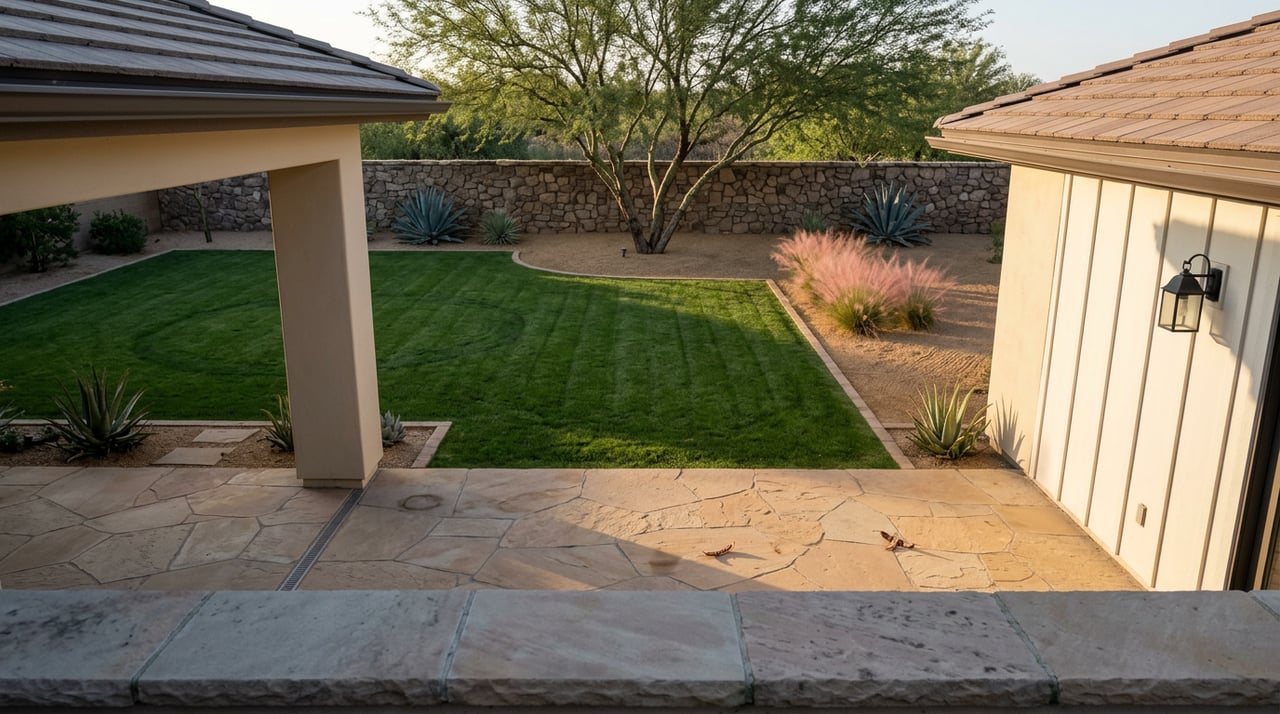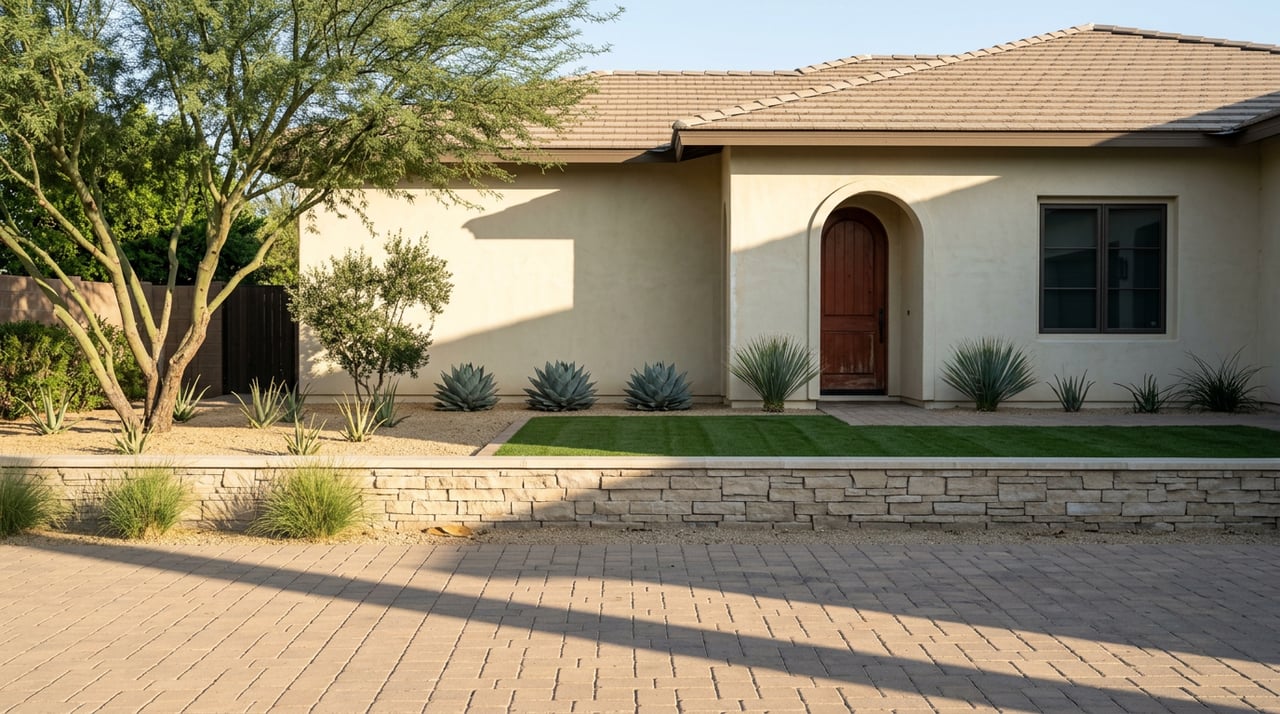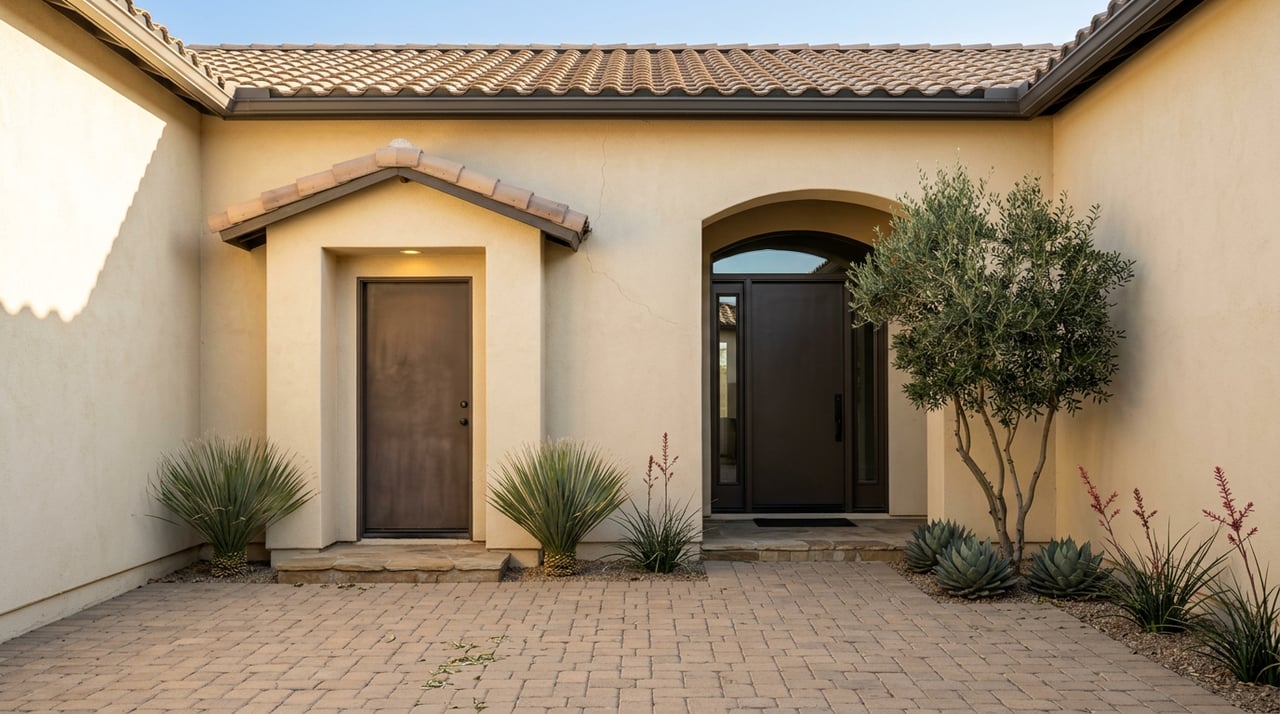
Ask a buyer what they picture when a Whitewing at Whisper Ranch listing mentions a casita, and most describe a small guest house sitting apart from the main structure, maybe across a courtyard, with its own walls and its own roof. That picture is common in Arizona luxury real estate. It is also not what Toll Brothers built in this particular gated community off Ellsworth Road.
Every casita description we found across Whitewing listings uses the same language: private entrance, separate exterior access, its own bedroom and bath. What none of them say is "detached." That single word, or its absence, changes how an insurance company treats the structure, how much coverage it carries, and whether renting it out under Arizona's newer accessory dwelling unit law is as simple as buyers assume.
The Casita Isn't the Guest House You're Picturing
Toll Brothers builds elsewhere in the Valley with true detached casitas. A listed home in Peoria's Blackstone Country Club advertised a detached casita with its own kitchen, living area, bedroom, bath, and multi-slide doors opening straight to the pool. Whitewing has not produced that version. Every casita we found in this community, from a six-bedroom estate on Natalie Way to a Weston Modern Farmhouse model replica, describes the space as attached, reached through its own door but still under the same roofline as the main house.
That distinction sounds architectural. It is actually financial, and it surfaces at the worst possible moment: during insurance underwriting, after you've already written an offer.
Why the Roofline Is an Underwriting Line
Arizona homeowners insurers do not treat a casita as one thing. They treat it as two, split entirely by whether it shares a structure with the house. An attached suite, garage conversion or otherwise, falls under your main dwelling coverage. A detached casita is its own building, covered separately under what carriers call "other structures," a coverage category typically set as a flat percentage of your dwelling limit. Ten percent is a common default. One Arizona insurance agency explained the mismatch plainly: that allotment was sized for a shed, not a second dwelling.
Run the math on a Whitewing-sized home. A $500,000 dwelling limit gives you $50,000 of other-structures coverage under a typical ten percent default, and that $50,000 has to cover your block wall, your shed, and a detached casita all at once if you had one. On a home with a finished guest suite that costs well beyond that to rebuild, the gap is real.
| Casita type | Coverage category | Typical limit |
|---|---|---|
| Attached (Whitewing's model) | Main dwelling coverage | Full dwelling limit |
| Detached (built at some other Toll Brothers AZ communities) | Other structures coverage | Often ~10% of dwelling limit |
For Whitewing buyers, this cuts in your favor. Because every documented casita here is attached, it rides under your full dwelling limit rather than a capped side coverage. You are not negotiating a separate line item with your carrier the way a buyer at a detached-casita community might.
The Rental Question Nobody Asks Until It's Time to Rent
Arizona passed House Bill 2720 in May 2024, giving statewide structure to accessory dwelling units and requiring larger municipalities to permit them. The law opened real possibilities for owners who want rental income or a private space for an adult child or aging parent. It also created a coverage question most buyers never think to ask before closing.
Standard other-structures coverage does not extend to a structure rented to someone who is not a tenant of the main dwelling. If you buy a home with a detached casita and rent it short-term, you may need to call your carrier before you list it, because renting can push the unit outside standard coverage entirely. An attached casita, sitting under your dwelling limit, does not carry that same separate negotiation, though any rental use still deserves a call to your agent before you take a booking.
What This Actually Means If You're Comparing Communities
If your priority is genuine separation, an elderly parent who wants their own front door with zero shared walls, or a rental unit you want fully independent from the main house on paper and in your policy, Whitewing's attached model will not deliver that, regardless of how the listing copy describes "private entrance" and "separate access." Those phrases describe a suite with its own door, not a second building.
If your priority is simplicity, one insurance conversation instead of two, no separate other-structures negotiation, no reason to re-check your policy the day you decide to rent the space, Whitewing's model actually works in your favor. The trade is privacy for simplicity, and it is worth knowing which one you are buying before you are three weeks into escrow and your insurance agent asks a question you did not expect.
The Rest of the Math
The casita question sits inside a bigger price story here. Recent listings across the community show homesites ranging from standard lots up to half-acre and one-acre-plus premium sites, a spread Toll Brothers built into the plan from the start. That lot variance, more than square footage alone, explains why two homes with similar floor plans can carry list prices hundreds of thousands of dollars apart.
HOA dues currently run $275 to $405 a month depending on the section, and the average annual property tax bill sits near $5,221. August 2026 sales data for the community show the trailing median sale price up 19.4% year over year, from $1,575,000 to $1,880,000, even as sales volume held roughly flat. Toll Brothers sold through its builder inventory here some time ago, so every transaction happening in Whitewing today is a resale, which means pricing now reflects what current owners believe their homes are worth rather than a builder's published price list.
None of that changes the casita math. It does mean that whatever you pay for the lot premium, you're also buying a specific structural choice about how that guest suite integrates with the main house, and that choice was made for you before the home was ever listed.
FAQ
Can I convert a Whitewing casita into a fully detached structure? Not without significant construction and a permit review, since it currently shares a roof and structural elements with the main house. Any owner considering this should start with the Town of Queen Creek's building department before assuming it's a simple modification.
Does an attached casita hurt resale value compared to a detached one? Not inherently. Buyers who want true separation will factor that into their search from the start, while buyers focused on multigenerational flexibility or guest space often find an attached suite meets their needs without the added insurance complexity a detached structure carries.
Should I mention the casita's attached status when I talk to my insurance agent? Yes, every time, whether you're buying or already own. Coverage categories are based on the physical structure, not on what the listing called it, and your agent needs the accurate description to quote the policy correctly.
If you're comparing Whitewing at Whisper Ranch against other East Valley gated communities and want the real numbers on what a specific lot, casita configuration, or HOA section means for your total cost of ownership, our neighborhood guide to Whitewing at Whisper Ranch is a good next stop. Or reach out directly to The Figz Real Estate and find out what your home is really worth before you write your next offer.