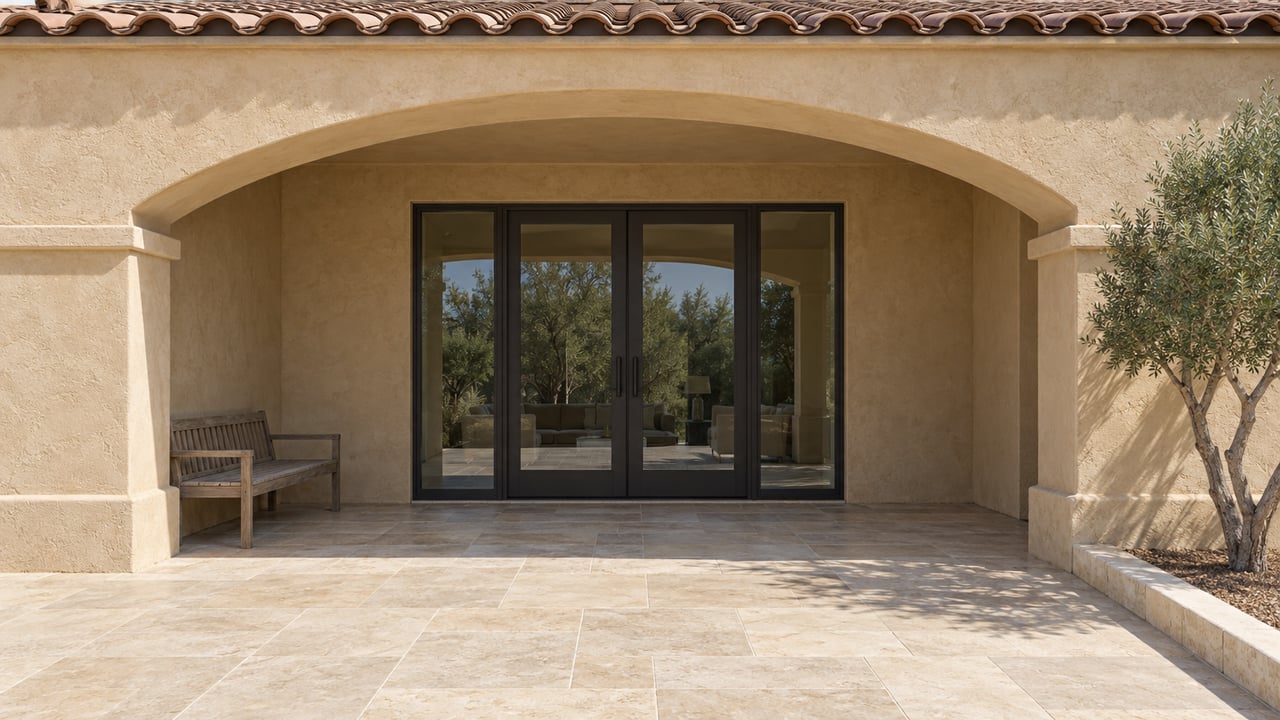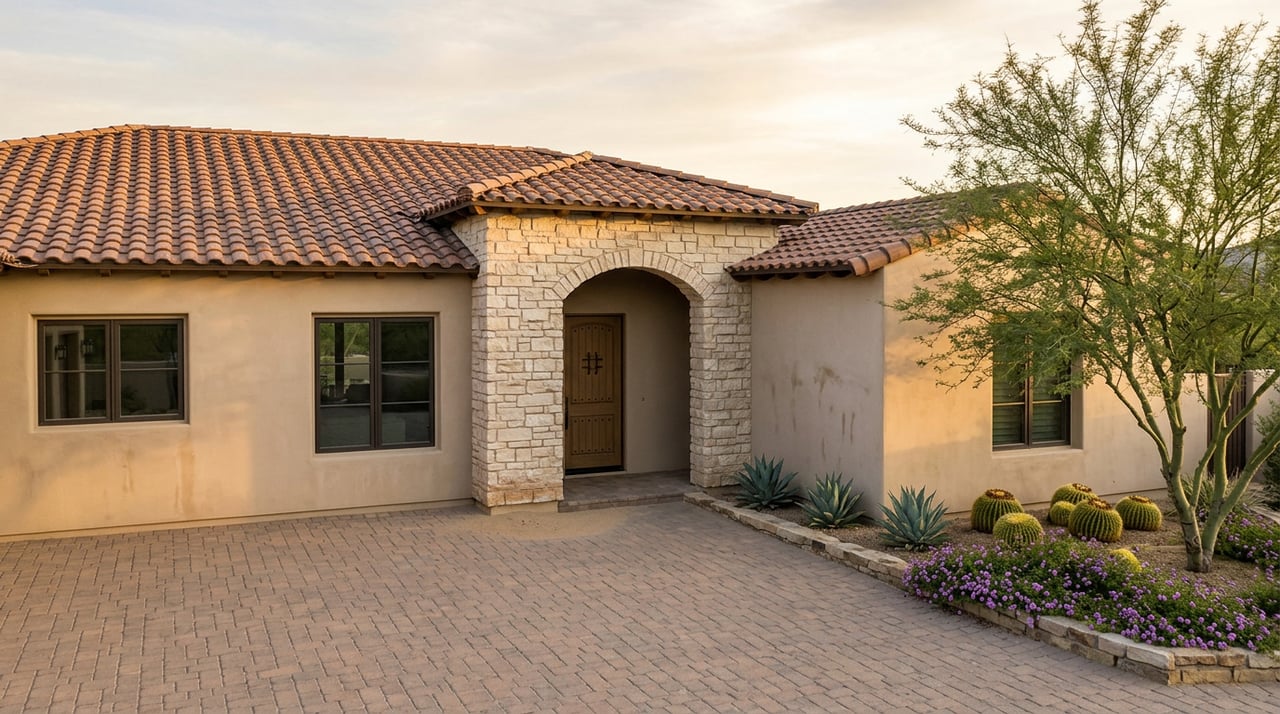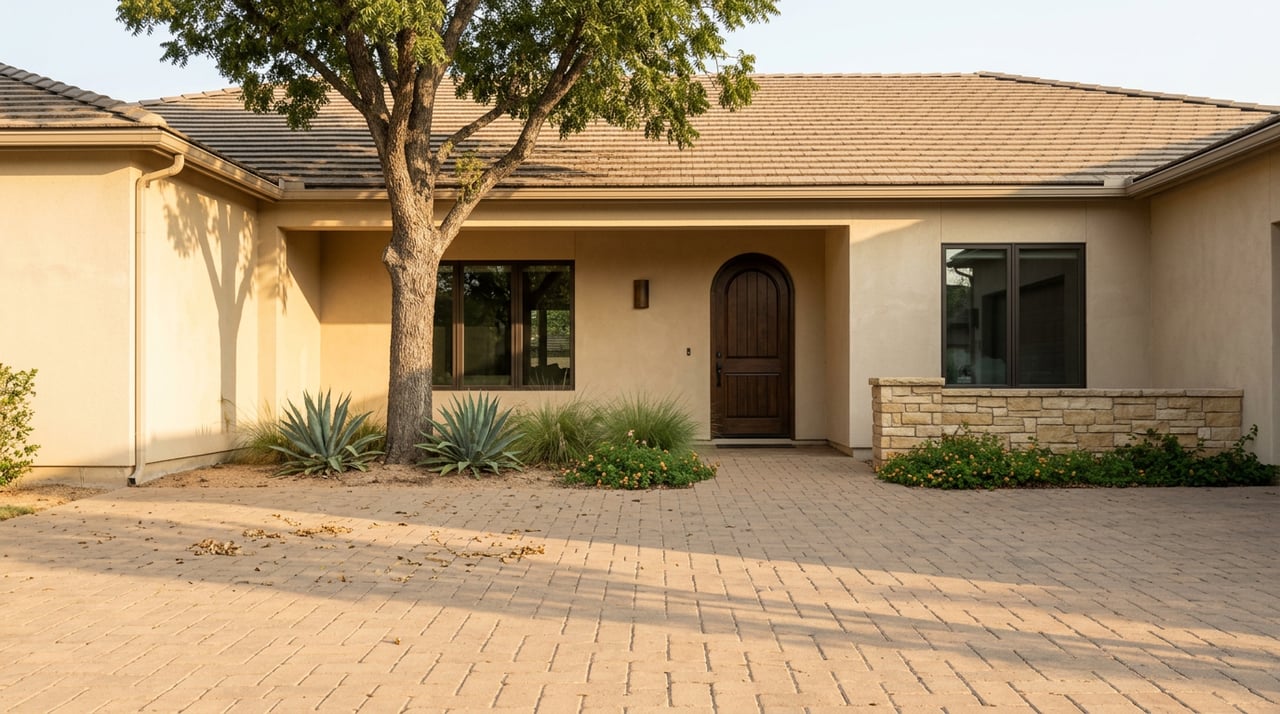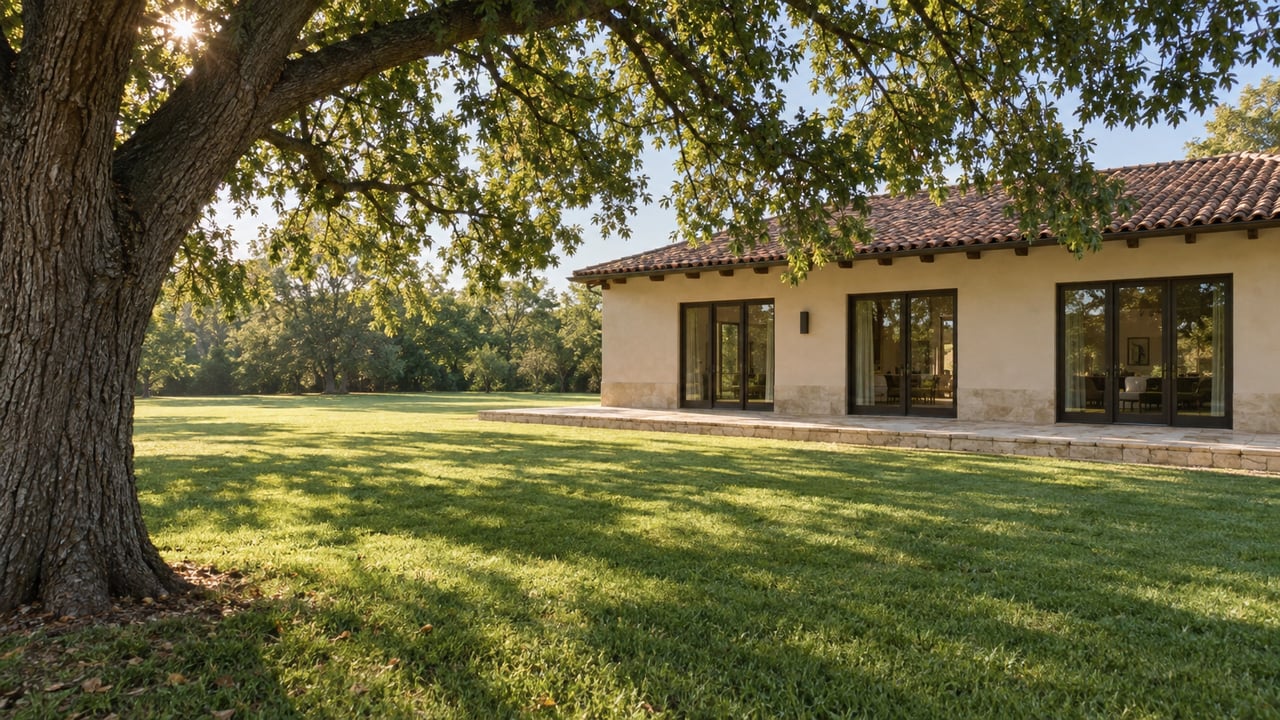
"When you buy a lot you have to cut a bunch of them down to build on."
That's how one online reviewer described building in The Pecans, the gated Queen Creek community marketed almost entirely on its mature pecan canopy. It's a small, blunt admission that sits uneasily next to the neighborhood's usual pitch: a 30-year-old working grove, thousands of trees, a canopy that "cannot be replicated." Both things are true. The grove predates the houses. And building a house here still means removing some of it.
That tension matters more than it sounds like it should, because it's the closest thing to an answer for a question that trips up almost every buyer comparing homes in The Pecans: why do two houses with nearly identical square footage, in the same construction phase, list several hundred thousand dollars apart?
Same Phase, Same Square Footage, Six Figures Apart
Pull current listings from Pecans Phase 4 and the spread shows up immediately.
| Square Footage | Configuration | List Price |
|---|---|---|
| 5,318 sqft | 5 bed / 5 bath | $2,399,000 |
| 5,318 sqft | 4 bed / 4.5 bath | $2,200,000 |
| 4,405 sqft | 6 bed / 4.5 bath | $1,900,000 |
The top two rows are the same square footage, in the same phase, roughly $200,000 apart. The third row is nearly 1,000 square feet smaller and still lists within striking distance of the larger homes. Phase and size alone don't explain the ladder.
Zoom out to the wider community and the pattern holds. One Phase 1 home sold for $3,500,000 in March 2026 at 6,760 square feet. Another Phase 1 listing, at 8,065 square feet, came to market at $5,950,000 and went pending in 16 days. That's a bigger jump in price than square footage alone accounts for, and a sale-to-list timeline fast enough to suggest the second home found a buyer who wasn't cross-shopping it against the first on a per-square-foot basis at all.
A mid-August 2026 snapshot of active Pecans listings put the average time on market at 107 days with a median list price of $1,950,000. That's a long runway for a seven-listing market. Part of what stretches it is exactly this problem: when the last three sales in a phase don't agree with each other, both buyers and sellers spend more time negotiating toward a number nobody can fully defend with recent comps.
What a Phase Number Actually Represents
It helps to be clear about what "Phase 3" or "Phase 4" actually means here, because it isn't a price tier the way phase numbers often work in production communities.
The Pecans developed over time through custom and semi-custom construction rather than a single builder releasing identical floor plans in sequence. That means a phase number tells you roughly when that section of the grove was platted for home sites. It doesn't tell you who built the house, what the house looks like, or how much of the original canopy survived on that particular lot. Ranch-style homes with wide porches sit near Territorial designs with thick walls, near contemporary builds with resort pools and clean lines. No two floor plans are drawn from the same set of plans, which means no two homes carry the same cost basis into a listing price.
In a production neighborhood, a buyer can look at a phase number and infer a builder, a base price point, and a standard lot size. In The Pecans, the phase number narrows down when construction happened and little else.
The Canopy Isn't Guaranteed by the Zip Code
Here's where the grove itself becomes the pricing variable nobody puts on a spec sheet.
The Pecans sits inside a pecan grove that's been growing for three decades, and some of those trees reach 40 feet. That canopy is the entire premise of the neighborhood's identity: shade, privacy without walls, a rural feel a few minutes from Queen Creek Marketplace. But building a custom home on an individual lot means clearing space for a footprint, a driveway, a pool, and often a casita or detached garage. How much of the grove a given lot keeps depends on when the lot was built out, how the house was sited, and what the original owner decided to preserve versus clear.
That's a lot-by-lot decision, not a phase-wide one. A buyer touring two homes with the same square footage in the same phase can walk into one with a dense, mature canopy shading the entire backyard and into another where the trees were thinned to make room for a larger pool deck or a sport court. Listing photos capture some of this. Square footage captures none of it. And it's exactly the kind of difference that shows up in price without showing up in the comp sheet.
Horse Zoning Changes at the Parcel Line
The same lot-by-lot logic applies to one of the other features buyers associate with The Pecans: large lots with room for horses or hobby livestock.
Equestrian and agricultural zoning in The Pecans varies by parcel and section rather than applying uniformly across the community. A lot that permits horses next door to one that doesn't isn't unusual here. Anyone for whom horse privileges or livestock allowances are part of the decision needs to confirm the specific zoning for the parcel in question with Maricopa County before writing an offer, not assume it from the neighborhood's general reputation.
That verification step matters for value too. A buyer paying a premium for the assumption of equestrian use on a lot that doesn't actually carry that zoning is paying for a feature the parcel doesn't have.
Why the Comps Won't Agree With Each Other
Put the pieces together and the price spread stops looking like noise and starts looking like the predictable result of a market with very few, very different data points to draw from.
The Pecans is capped at roughly 258 total home sites. That's a small number for a luxury submarket, and turnover here has historically run lower than in comparable East Valley communities, which means the pool of recent, relevant sales in any given phase at any given time is thin. Add in a community built by many different custom and semi-custom builders instead of one production company, add in canopy and zoning that shift lot to lot, and the result is a neighborhood where the last sale down the street may not be a reliable stand-in for the house currently on the market.
The HOA structure reinforces that the price differences aren't about differing amenity tiers. Monthly dues in The Pecans typically run $150 to $250, covering gated entry, common area landscaping, and orchard maintenance. That's a modest fee for a luxury gated community, and it isn't buying a golf course or a resort clubhouse the way some Queen Creek HOAs do. The variation in price between homes here isn't coming from a bundle of shared amenities that differ by section. It's coming from what's true of that specific parcel and that specific house.
Before You Put an Offer Sheet Next to a Comp
For a buyer comparing two Pecans listings, or an out-of-area buyer trying to gut-check a number against what a portal shows as the neighborhood median, a few questions do more work than square footage:
- How much of the lot's original canopy is still standing, and where does it fall relative to the pool, patio, or primary bedroom windows
- What's the actual usable yard space once the home's footprint, pool, and any casita or workshop are accounted for, not just the platted lot size
- Does this specific parcel carry equestrian or agricultural zoning, confirmed directly with Maricopa County rather than assumed from the community's reputation
- How recent and how comparable are the sales being used to justify the asking price, given how few transactions happen in any single phase in a given year
None of these show up in a standard listing sheet. All of them show up in the final number.
FAQ
Are HOA dues the same across every phase of The Pecans? Dues generally fall in the $150 to $250 monthly range community-wide, covering gated entry, common area landscaping, and orchard maintenance rather than a large shared amenity package.
Does every lot in The Pecans allow horses? No. Equestrian and agricultural zoning varies by parcel and section. Confirm the zoning for a specific property with Maricopa County before treating horse privileges as part of the deal.
Why would a smaller home in the same phase list higher than a larger one? Because square footage and phase number don't capture what actually varies lot to lot: how much grove canopy survived construction, how efficiently the house uses its lot, and how recently comparable sales happened nearby. In a community with only about 258 total home sites and low turnover, any two houses can differ more than their size suggests.
If you're trying to make sense of a specific listing in The Pecans, or you want a read on what your own home there is actually worth given what's happening lot by lot right now, The Figz Real Estate can walk through the comparison with you.